Author: mattmenger_admin

  • The Ethics of AI and Ethnoarts

    Note: Within SIL, I am working on a similar statement on how we, as an organization, will work with AI and the arts. The following are my own thoughts.

    Introduction

    The emergence of Artificial Intelligence (AI) represents a massive shift in the world of creative expression and the arts. For me, this technological shift offers opportunities to accelerate progress in some areas, but also new ethical and missiological risks. 

    In my ministry, I  want to use AI in ways that honor people and their communities, not in ways that exclude or hinder flourishing and creativity. I work for SIL, and we are committed to increasing our AI expertise, specifically in non-exploitative approaches, with an emphasis on ethics. Yet this exists in tension with our other priorities, especially our desire to be locally rooted. 

    The Lausanne Movement published an extensive reflection on Christian Faith and Technology that considers the implications of AI and other technologies from various perspectives. Some might consider AI as a tool, and therefore neutral—its value depends on its use. In the Lausanne document, they address this perspective and note that:

    A better way to consider an improved relationship between technology and humans is to recognize that our technologies are value-laden. That is, they exist and are used because of certain values and ways of seeing the world present in the human community that created the technology. These values shape what technologies to develop, the kinds of knowledge and processes used to make them, and the moral framework not just of their end use, but also how they shape and are shaped by the communities they are embedded in.

    In this way of thinking, the relationship between AI and the arts is complex. AI is not neutral; it also reflects the values and “ways of seeing the world” of its creators and the materials on which it was trained.1 The use of AI is not simply a matter of the products it can create, but also of how its use (and the interaction with its products) shapes the community. A foundational guiding statement for me is a quote from a doxology at the end of the Lausanne paper: “Lord, let us always use our technological skills in the loving service of you, and through that service seek the well-being of our neighbors.” Within this concept, how can I use or condone AI in ethnoarts? This document and the following principles outline my thinking on the use of AI in artistic creation within the context of cross-cultural ministry. 

    Seven Principles for AI and Ethnoarts

    1. Intelligent Delegation

    We should use AI to empower humans, not render them unnecessary. Ethnoarts values human authorship. Artistic expressions can be complex congeries of words, emotions, histories, narratives, situations, feelings, ideas, and more. While AI might be able to translate text accurately and usefully in some cases, I believe it cannot generate an artistic expression that carries the accumulated ideas, grief, joy, and history of a specific people group without engaging in a form of mimicry that rings hollow.2

    We must practice intelligent delegation.3  VerifiedHuman™ describes the important distinction of works being “essentially human-authored,” and I strive for the minimum level of VH3 in their Human–AI Collaborative Spectrum. This might mean allowing AI for certain technical tasks while reserving other, more creative tasks for humans. All work involving AI should also be thoroughly checked and tested by humans.

    2. Keeping People First

    People should come first in any application of AI in the arts. My theological foundation is found in Philippians 2:3-8, in the incarnational model of Jesus. Brian Schrag outlines this within the framework of “Be With—Learn From—Work Toward.”4 Any application of AI should be founded in this relational dynamic. The arts are embodied: they are products of community life. AI is a disembodied product, likely introduced from outside the community, and it lacks connection to place and personhood. Important questions to ask are: Who owns an AI-generated artistic product? Who feels proud of it?

    A healthy community values people. If local artists are replaced—or feel replaced—the community suffers. This is a consideration not only for AI but also for electronic musical instruments, such as programmable electronic keyboards, arranger workstations, looping pedals, and other technologies that can replace multiple musicians. I desire to ensure technology amplifies the voices of artists rather than silencing them. 

    3. Prioritizing Transformational Process over Product

    The process of artistic creation is important, not just the final product. Transformation occurs within a community and among its artists as they wrestle with and through the process of artistic creation. The process is not merely a means to an end (a product), but a site for discipleship, identity formation, and transformation. Working with Scripture to express it artistically can be deeply transformative for the artist and, in turn, for those who encounter the resulting artwork. The one experiencing the artwork is not simply consuming content, but empathizing with and participating in the creator’s spiritual engagement. I will continue to make art and encourage others to do the same, even though I could generate products with AI, because I believe art shapes people and culture throughout the process of creating it and interacting with it.

    The value of an artistic expression is linked to the human agency required to produce it. AI-generated artistic expressions risk becoming objects for consumption, bypassing important opportunities for creativity. Automating the creative process with AI overlooks many important elements, such as the transformational dynamics of the creative process, community ownership of the product, and community participation in and affirmation of artistic expressions.

    I measure the impact of the arts on people and communities, not the volume of production.5 AI-generated content might be more affordable or efficient to produce, and the ethics of efficiency and availability versus quality and process are complex. Even as AI can generate new ideas and speed up processes, it can diminish our human ability to imagine and practice intuition. While efficiency or speed may at times be valued by some above human creativity, I believe that when a process is automated, transformation ceases.6

    4. Focusing on Local First

    At present, AI music generation suffers from data bias, and I do not envision this improving significantly for minority communities. AI models are predominantly trained on dominant, readily available Western artistic expressions and struggle to accurately replicate unique local artistic systems. In music, this can mean that microtonal harmonies, vocal timbres, instrument sounds, song forms, complex rhythms, tempo variations, and more are lost or Westernized within a concerning neocolonial dynamic. This reinforces the need for community-centric methodologies, such as Creating Local Arts Together, and other processes that I use.

    My ministry is tied to the flourishing of communities. If I deploy tools that extract data and return synthetic pseudo-culture, I compromise my identity as a trusted partner and advocate. If I use AI to attempt to recreate local artistic styles, particularly within minority communities, the output is usually little more than a dim reflection at best. It is often fundamentally tuned to Western ears and eyes. 

    When a community hears AI music, or an AI musical instrument, they hear, for example, the sound of “a bass,” but not “our kasteh” (a 2-stringed bass instrument from Halmahera, Indonesia). The link to ownership and place is broken, and the local is stripped away as the embodiment of musical creation is removed.

    5. Honoring Community Rights

    In many cases, training of commercial AI models occurs without the informed consent of communities and artists. This is an ongoing debate in the Western world, but it equally applies to any AI model that claims the ability to create local or “ethnic” artistic expressions. I want to position myself as an advocate for and steward of local communities’ data rights. 

    In the case of AI-generated artistic products, ownership is complex. Does the community own their AI creations, does the company that created the AI own them, or can anyone take and reuse them, possibly for commercial purposes? I will never use AI products to generate artistic expressions without these conversations with communities.

    6. Maintaining Transparency

    All AI products must be clearly labeled. Communities, artists, and anyone who interacts with artistic expressions I am involved with should clearly know whether products are human- or AI-generated. I encourage pride in being creative, and applaud initiatives such as VerifiedHuman™, which provides a helpful spectrum for understanding how AI is used in creative ventures and ways for creators to proudly display that their work is essentially human-generated.

    This raises important questions: If we are unwilling to claim ownership of or take pride in AI-generated artistic expressions, should we make them, or encourage their creation? How do communities and end-users feel and respond when they become aware that an artistic expression is either fully or partially AI-generated? How does this impact engagement?

    7. Learning with Humility

    I recognize that technology and AI are rapidly evolving. It is likely that AI models will continue to improve and localize, and may be able to create more appropriately in the future. Many other organizations or people may be utilizing AI for creative endeavors in ways I may find concerning. In partnership, I may find myself in difficult situations as I consider how and whether to collaborate on ventures involving AI and the arts. Beyond the clear ethical issues, my general approach is to preserve space for careful discernment, attentive listening, and learning together. I should never fear to ask, “What if I am wrong?” I will gently work alongside others with different views to improve and educate about the use of AI in the arts, recognizing that their work may not yet fully align with my ideals. Rather than ignore or refuse to collaborate, I choose to encourage them toward what is better.

    Conclusion

    In light of these principles, I affirm the importance of working with communities to discern together how and whether AI should be used in their artistic and spiritual expression. I seek for AI to remain a servant of human creativity, community participation, and local ownership rather than a substitute for them. My calling is not to produce artistic products, but to walk alongside communities as they encounter God’s Word and express it through their own unique artistic voices. While AI may assist and sometimes support human creativity, it must never displace the relational, incarnational, and transformational dynamics at the heart of my work. As technology evolves, I will continue to engage with AI and encourage others to do the same with discernment and faithfulness, always seeking to ensure that people, languages, and communities flourish as active creators in God’s redemptive work.

    Resources

    Cheng, Adam, Aaron Calhoun, and Gabriel Reedy. 2025. “Artificial Intelligence-Assisted Academic Writing: Recommendations for Ethical Use.” Advances in Simulation 10 (1). https://doi.org/10.1186/s41077-025-00350-6.

    “Christian Faith and Technology.” n.d. Lausanne Movement. Accessed February 18, 2026. https://lausanne.org/occasional-paper/christian-faith-and-technology.

    COPE. 2023. “Authorship and AI Tools.” Accessed February 13, 2026. https://publicationethics.org/guidance/cope-position/authorship-and-ai-tools.

    Crouch, Andy. 2022. The Life We’re Looking For. First Edition. Convergent Books, an imprint of Random House.

    “Ethics of Artificial Intelligence – AI | UNESCO.” 2026. Accessed January 27, 2026. https://www.unesco.org/en/artificial-intelligence/recommendation-ethics.

    “Ethics Statement | SIL AI & NLP.” 2026. Accessed February 18, 2026. https://ai.sil.org/ethics.

    Kaufman, Gil. 2026. “SZA Feels Like She’s ‘At War Because of AI,’ Slams ‘Weird, Stereotypical Struggle Music’ Being Generated By Artificial Intelligence.” Billboard, March 6. https://www.billboard.com/music/rb-hip-hop/sza-at-war-ai-weird-struggle-music-artificial-intelligence-1236194236/.

    Knöchel, Tim-Dorian, Konrad J. Schweizer, Oguz A. Acar, et al. 2025. “Core Principles of Responsible Generative AI Usage in Research.” AI and Ethics 5 (6): 6371–77. https://doi.org/10.1007/s43681-025-00768-8.

    Leo XIV. Magnifica Humanitas [Magnificent Humanity]. Encyclical letter, May 15, 2026. The Holy See. https://www.vatican.va/content/leo-xiv/en/encyclicals/documents/20260515-magnifica-humanitas.html.

    “Protocols for Using First Nations Cultural and Intellectual Property in the Arts | Creative Australia.” 2025. Accessed February 18, 2026. https://creative.gov.au/first-nations-arts/protocols-for-using-first-nations-cultural-and-intellectual-property-in-the-arts.

    Schrag, Brian. 2025. Creating Local Arts Together (Revised and Updated). William Carey Publishing.

    TJC. 2023. “The New Frontier: Artificial Intelligence, Copyright and Indigenous Culture.” Terri-Janke.  Accessed November 30, 2025. https://www.terrijanke.com.au/post/the-new-frontier-artificial-intelligence-copyright-and-indigenous-culture.

    Tomašev, Nenad, Matija Franklin, and Simon Osindero. 2026. “Intelligent AI Delegation.” arXiv:2602.11865. Preprint, arXiv, February 12. https://doi.org/10.48550/arXiv.2602.11865.

    VerifiedHuman. 2026. “VerifiedHuman | Human-Made Content Certification.” Accessed March 10, 2026. https://www.iamverifiedhuman.com.

    1. See also Magnifica Humanitas by Pope Leo XIV. In Paragraph 92 he writes that “technology is not simply a tool. When it becomes the standard by which everything is judged, it begins to dictate what matters and what can be discarded, reducing creation to an object of exploitation and human beings to mere cogs in a system driven toward ever greater efficiency.” ↩︎
    2. In an interview with Billboard, the singer SZA describes the issue of AI creating “weird, stereotypical struggle music” that she finds offensive. This is one example of AI attempting to speak for a community in way that the community itself may find unacceptable (in this case African-Americans). AI has not experienced their “struggle,” so is it able to speak on their behalf?
      ↩︎
    3. A good rule of thumb for intelligent delegation is to be able to describe what you’ve delegated to AI and who is accountable for it in one sentence. ↩︎
    4.  Schrag, Brian. 2025. Creating Local Arts Together (Revised and Updated). William Carey Publishing. Page 26. ↩︎
    5. In his book The Life We’re Looking For, Andy Crouch notes: “Human beings may well benefit, for example, by having access to unlimited amounts of recorded music from all over the world and from the whole history of recorded music. Sure enough, technology is glad to provide that—at an economic profit to the owners of streaming services, although not in a way that sustains more than a handful of actual working human musicians. But human beings also benefit enormously from making music, which requires deep communal instruction, personal attention, and years of practice and preparation. This, alas, is a kind of benefit technology cannot readily provide—at least not profitably—so technology does not particularly “want” to help. So we end up with the world we have, where more music is consumed than ever and less music is created, especially by ordinary people in economically sustainable ways, than ever” (emphasis added). ↩︎
    6. In paragraph 140 of  Magnifica Humanitas, Pope Leo XIV notes, “Educating people about the use of AI, then, involves teaching them to decide when and for what purpose it ought not to be used. The speed and ease with which answers or summaries can be obtained risk extinguishing the desire to ask questions, which is a process that bears fruit only over time.” ↩︎
  • Shifting from Solutions to Situations

    As much as we may try, we often plant the same seeds everywhere we go. This is not a new idea. The old “bring it—teach it” paradigm is like a gardener with a single kind of seed, planting freely and assuming it will flourish in any soil. Energy is exhausted trying to replicate the same garden everywhere, when instead we should be finding and encouraging, discovering and cultivating what God is already causing to grow in that place.

    We have moved past the old “bring it—teach it” mentality when it comes to artistic expressions, and that’s as it should be. But I’ve been pondering the temptations in our methodology to return to the comfort of that way of thinking. It’s easy, and low-effort. Perhaps we don’t bring foreign arts and teach them, but what about our methodologies? Is “ethnoarts” a methodology or a mindset?

    In Indonesia, we’ve achieved some success, conducting dozens of songwriting workshops across the archipelago in the past decade and facilitating the composition of numerous local-language and -style songs through various events. I’m thrilled to see this aspect of ethnoarts embraced in Bible translation programs in Indonesia and to work alongside a great team. But I’m pondering what assumptions might lie behind that, to replicate what has worked elsewhere automatically. In Indonesia and elsewhere, we can read about success or experience it ourselves, and too quickly assume the same things will work here, too, in a new place.

    But this gets the order of our thinking backward. The danger lies in defaulting to a pre-packaged solution, even though it might be a good one that values local artistic expressions. Rather, we should start with the community’s situation and discover a way forward together. We should come to methodologies from our situations and explore what resonates. And then, with the community, we find a potential solution—or at least something to try together.

    I want to soften this, though. Sometimes, we’ve started with less-than-best, and there is a time and place to “do something”  to catalyze the conversation. Excessive idealism can be paralyzing. In Indonesia, sometimes songwriting workshops were not the correct answer, but even so, they provided an opportunity for us to show up and open conversations with the community. Because we engaged, better things came later—more aligned with the situation.

    I’ve been pondering this solution-vs-situation dichotomy, a near cousin of process-vs-product. Solutions emphasize products, and in some cases (like songwriting workshops), language programs love them because they seem quantifiable. Situations, though, include the messiness of process and relationship. I can throw a product at a problem as a solution, but process is about transformation. Where product is a static object, process lives in time. And time is where change happens, where flourishing begins.

    The temptation is to see people as objects, and to freeze situations into still images so we can find the right solution, the right product. Thinking about situations and processes acknowledges that people are subjects-in-relationship, moving through time. Jesus looked at people not as objects, but as fellow subjects and imago Dei. And in the Trinity, we see the foundations for relationship, which points us beyond looking narrowly at the problem at our feet, lifting our gaze to see the bigger picture.

    I want to encourage us to look at the messiness of situations and to thrive on the process. We now have numerous great resources available, including programs at several universities, frequent Arts for a Better Future workshops, the Sparking Creativity podcast, and a second edition of Creating Local Arts Together. And sometimes, we need to take decisive action and get started. But if we choose a solution and then look to our foundations for justification, we have it the wrong way around. Remain winsome and curious, and consider the situations we find ourselves in. Then, we can humbly walk alongside communities as they journey toward a better future.

    So we return to the picture of a garden. The great temptation in our work is not necessarily to plant the same seed everywhere—we have moved beyond that. But we can still be tempted to create a methodological monoculture—to apply the same successful technique, the same workshop model, the same solution to every unique plot of ground we encounter. This may appear efficient and yield a quantifiable “crop” for a season, but because it overlooks the specific ecology of each situation—the unique history, relationships, spiritual landscape, and artistic vocabulary—it is fragile and unhealthy. Embracing the situation and the process is an act of faith as we garden alongside the community. It’s not defined by a single, repeatable thing, but by complex, wild, and diverse life-giving relationships. Our goal should not be to master a single, replicable solution, but to join communities in becoming patient stewards of a creative ecosystem.

  • Menikmati Firman Tuhan

    The original post in English, “Enjoying God’s Word,” can be found here. This Indonesian version was created with the help of my colleague, June Rumthe.

    Pernahkah Anda mencoba untuk membangun atau menghentikan suatu kebiasaan hanya dengan membaca atau mendengarkan informasi? Apakah Anda pernahkah berhasil mengubah suatu kebiasaan hanya karena tahu bahwa hal itu benar untuk dilakukan? Menurut pengalaman saya, cara itu biasanya tidak terlalu berhasil. Kita sering bergumul untuk melakukan apa yang ingin kita lakukan, tetapi sebaliknya, kita melakukan tindakan yang seharusnya kita hindari. Paulus berbicara tentang hal ini dalam hidupnya sendiri di Roma 7:15 ketika ia berkata, “Sebab apa yang aku perbuat, aku tidak tahu. Karena bukan apa yang aku kehendaki yang aku perbuat, tetapi apa yang aku benci, itulah yang aku perbuat” (TB). Dari sini kita dapat memahami bahwa pengetahuan tidak selalu menghasilkan tindakan; apa yang ada di kepala kita tidak selalu dapat mengarahkan hati kita. Namun, kita menjalani hidup—dan membaca Alkitab—seolah-olah demikian, seolah-olah yang kita butuhkan hanyalah sedikit informasi tambahan untuk menjalani kehidupan Kristen secara utuh dan penuh sukacita. Kita sangat terampil dalam mempelajari informasi, tetapi untuk sampai pada tahap mengubah perilaku kita itu sulit. Hubungan kita dengan Firman Tuhan membutuhkan lebih dari sekadar pemahaman intelektual; itu juga membutuhkan keterlibatan hati kita.

    Gagasan utama saya adalah bahwa kita perlu menikmati Alkitab. Memahami apa yang kita baca  seharusnya menjadi suatu pengalaman yang menyenangkan. Terkadang, untuk benar-benar memahami suatu teks, kita perlu menghayatinya terlebih dahulu. Dalam tulisan berikut ini, saya akan banyak merujuk pada sebuah buku yang saya baca sebagai sumber inspirasi: Enjoying the Bible: Literary Approaches to Loving the Scriptures oleh Matthew Mullins.

    Firman Tuhan Lebih dari Sekadar Buku Petunjuk

    Kita biasanya tahu hal yang benar untuk dilakukan, tetapi pengetahuan di kepala tidak selalu mampu menggerakan hati kita. Meskipun kita menyadari hal ini , kita sering membaca Alkitab seolah-olah itu hanyalah buku panduan untuk pikiran kita, dengan hanya mencari ide-ide utama untuk diterapkan. Sebenarnya, ada banyak pelajaran yang bisa kita ambil dari Alkitab dengan cara itu. Namun, masalah muncul ketika cara ini menjadi satu-satunya metode kita dalam membaca Alkitab. Ketika kita berasumsi bahwa memahami setiap teks hanya berarti menangkap gagasannya dan menerapkannya secara  sederhana, kita berisiko kehilangan banyak bagian Alkitab dirancang untuk menyentuh  hati kita. Kita juga mengabaikan peran penting hati kita dalam upaya mengubah tindakan kita.

    Ini bukan berarti kita mengabaikan kebenaran atau ajaran Alkitab. Dalam 2 Timotius 3:16 Paulus menjelaskan kepada  Timotius bahwa “Segala tulisan yang diilhamkan Allah memang bermanfaat untuk mengajar, untuk menyatakan kesalahan, untuk memperbaiki kelakuan dan untuk mendidik orang dalam kebenaran” (TB). Kita perlu memperluas pemahaman kita tentang apa arti pengajaran. Ini bukan hanya tentang mempelajari sebuah pelajaran dengan pikiran kita. Paulus menekankan kepada Timotius, “segala tulisan.” ini menunjukkan bahwa semua hal, bahkan hal-hal yang tampaknya sulit untuk dipahami juga termasuk di dalamnya.

    Dan ada beberapa bagian Alkitab yang tidak selalu sederhana dan berbicara secara langsung. Di dalam Alkitab, Allah menggunakan berbagai bentuk seni—seperti puisi, amsal, perumpamaan, cerita—untuk berkomunikasi. Bentuk-bentuk ini bertujuan untuk menarik  imajinasi kita dan menggerakkan hati kita, yang pada gilirannya membawa kita kepada pemahaman yang lebih dalam dan transformatif.

    Paulus berbicara tentang hati dan pikiran kita dalam Kolose 3:1-2:

    Karena itu, kalau kamu dibangkitkan bersama dengan Kristus, carilah perkara yang di atas, di mana Kristus ada, duduk di sebelah kanan Allah. Pikirkanlah perkara yang di atas, bukan yang di bumi. Sebab kamu telah mati dan hidupmu tersembunyi bersama dengan Kristus di dalam Allah. (TB)

    Dalam bahasa Yunani, kata “carilah” (NIV: set your hearts on) berasal dari kata yang berarti “mencari, mendambakan, menginginkan.” Ketika Paulus mengatakan “pikirkanlah” (NIV: set your minds on), itu berasal dari kata yang berarti ”berpikir.” The Bible Knowledge Commentary mencatat bahwa “Yang pertama menyiratkan perjuangan; yang kedua menyiratkan konsentrasi.” Sehingga kalau kita hanya memandang Alkitab sebagai buku panduan untuk pikiran kita, hal itu dapat mengakibatkan hilangnya pemahaman tentang  bagaimana Alkitab juga bertujuan untuk mengajar hati dan keinginan kita. Tapi seperti apa bentuknya?

    Saya selalu tertarik pada Mazmur 119. Mazmur ini sepenuhnya didedikasikan untuk Firman Tuhan, dari awal hingga akhir. Mazmur ini dipenuhi dengan permadani tema yang kaya—tema-tema yang muncul berulang kali di sepanjang mazmur. Hal yang sangat mencolok adalah betapa banyak tema-tema Firman Tuhan ini tidak hanya berfokus pada  pemahaman intelektual, tetapi juga secara jelas menyentuh emosi dan perasaan. Beberapa tema lainnya menunjuk langsung pada tindakan dalam menghidupi kebenaran Tuhan. Tema-tema itu meliputi ketaatan, cinta pada firman Tuhan, mengingatnya, berharap padanya, meminta pengertian, atau agar Tuhan mengajar pemazmur, serta tidak merasa dipermalukan oleh orang sombong yang meremehkan Firman Tuhan, dan banyak lagi.

    Salah satu tema yang menarik adalah kesukaan. Pemazmur bersukacita dalam Firman Tuhan—tema ini muncul 8 kali, seperti dalam ayat 47 (TB): “aku hendak bergemar dalam perintah-perintah-Mu / yang kucintai itu.” Dalam tafsirannya tentang Mazmur, John Goldingay mendefinisikan kata Ibrani yang digunakan untuk kesukaan (NIV: delight) sebagai “sikap bermain seorang anak yang tanpa hambatan dan tanpa beban.” Apakah ini cara kita mendekati Firman Tuhan? Jika tidak, bagaimana kita bisa mencapainya?

    Hati adalah istilah lain yang muncul berulang kali dalam Mazmur 119. Dalam Perjanjian Lama konsep “hati” tidak dipahami seperti cara pandang dunia Barat saat ini, yang memisakan antara hati dan pikiran. Dalam bahasa Ibrani, keduanya dianggap sebagai satu kesatuan. Theological Dictionary of the Old Testament mengatakan bahwa hati “berfungsi dalam semua dimensi kehidupan manusia dan digunakan sebagai istilah untuk semua aspek dari diri seseorang.” Berbeda dengan pemahaman Barat, yang mengaitkan hati dengan emosi dan perasaan, konsep Ibrani dalam Perjanjian Lama jauh lebih luas. Hati melambangkan pusat dari seluruh keberadaan seseorang. Meskipun saya sering menyebutkan kepala dan hati sebagai dua hal yang berbeda, ingatlah bahwa para penulis Perjanjian Lama tidak berpikir seperti itu.

    Luangkan waktu sejenak untuk merenungkan Mazmur 119. Bacalah dan perhatikan  bagaimana mazmur ini mempengaruhi perasaan  Anda. Apa gambaran yang muncul dalam pikiran Anda. Apa pesan yang disampaikan kepada Anda melalui setiap bagiannya. Sebagai mazmur yang sepenuhnya berfokus pada Firman Tuhan, sangat menarik untuk melihat seberapa dalam mazmur ini berbicara tentang emosi, perasaan, dan sikap hati kita. Ini berkaitan dengan bagaimana kita menemukan sukacita dalam Kitab Suci. Ini bukan sekedar tentang pengetahuan yang ada di dalam pikiran kita; ini tentang bagaimana Firman Tuhan menggerakkan dan mengubah kita dari dalam ke luar. Bagaimana jika kita membaca Mazmur 119 dengan sungguh-sungguh? Bagaimana jika kita mendalami maknanya, dan hidup sesuai dengan ajarannya, serta berusaha merasakan apa yang dirasakan oleh pemazmur?

    Bentuk dan Isi Tidak Terpisahkan

    Poin kedua saya adalah bahwa bentuk dan isi saling terkait. Bentuk komunikasi ini sangat penting, karena merupakan bagian integral dari pesan yang ingin disampaikan. Sering kali, para penulis Alkitab memilih cara-cara khusus untuk menulis. Misalnya, mengapa mereka terkadang menggunakan puisi daripada pernyataan atau perintah sederhana? Mengapa Yesus berbicara dalam perumpamaan? Mengapa kitab-kitab nubuat penuh dengan gambaran dan sering ditulis dalam bentuk puisi? Ini karena kita sering melupakan satu hal: bentuk membantu membangun makna. Apa yang disampaikan, dan bagaimana cara penyampaiannya, tidak dapat dipisahkan.

    Mari kita perhatikan ungkapan pujian Paulus di akhir surat Roma pasal 11 (ayat 33-36). Pertimbangkan semua yang telah diajarkan Paulus kepada para pembacanya dalam 11 pasal sebelumnya. Ada banyak informasi berharga di sana, serta pemikiran mendalam dari seorang yang cerdas dan bijaksana. Dan kemudian, di akhir semua itu, dia mengatakan ini:

    33 O, alangkah dalamnya kekayaan, hikmat dan pengetahuan Allah! Sungguh tak terselidiki keputusan-keputusan-Nya dan sungguh tak terselami jalan-jalan-Nya!

    34 Sebab, siapakah yang mengetahui pikiran Tuhan?

    Atau siapakah yang pernah menjadi penasihat-Nya?

    35 Atau siapakah yang pernah memberikan sesuatu kepada-Nya, sehingga Ia harus menggantikannya?

    36 Sebab segala sesuatu adalah dari Dia, dan oleh Dia, dan kepada Dia: Bagi Dialah kemuliaan sampai selama-lamanya! Amin.

    Mengapa ada sebuah puisi di sini? Puisi ini menyampaikan sesuatu yang melampaui sekedar kata-kata—Paulus berusaha mencapai sesuatu yang lebih dalam—perasaan takjub, heran, dan misteri.

    Atau, mari kita lihat paradoks dalam Amsal 26:4-5 (TB):

    4 Jangan menjawab orang bebal menurut kebodohannya, supaya jangan engkau sendiri menjadi sama dengan dia.

    5 Jawablah orang bebal menurut kebodohannya, supaya jangan ia menganggap dirinya bijak.

    Bagaimana keduanya bisa benar? Amsal-amsal ini tidak dimaksudkan untuk memberikan satu jawaban sederhana. Sebaliknya ini dirancang untuk membuat kita berhenti sejenak, bergumul, dan merenung, serta melibatkan imajinasi—dan hati kita. Yesus juga menggunakan paradoks, seperti dalam Matius 10:39. Dia berkata, “Barangsiapa mempertahankan nyawanya, ia akan kehilangan nyawanya, dan barangsiapa kehilangan nyawanya karena Aku, ia akan memperolehnya” (TB). Ajaran ini mendorong kita untuk merenungkan jalanTuhan, yang seringkali lebih tinggi dan berbeda dari jalan kita, dan itu membutuhkan waktu. Tidak ada penerapan yang sederhana dalam ayat-ayat ini. Kita cenderung berusaha memisahkan bentuk dari isi, medium dari pesan. Tetapi contoh-contoh ini menunjukkan bahwa hal tersebut tidak selalu mungkin. Bentuk pesan adalah bagian dari bagaimana ia berkomunikasi dengan kita.

    Daripada mencari jawaban cepat di Alkitab setiap kali kita membukanya dan memutarbalikkan ayat-ayat di luar konteks agar sesuai dengan kebutuhan kita, ingatlah untuk juga mengalihkan perhatian kepada bagian-bagian artistik yang indah yang menahan jawaban. Ini mendorong kita untuk merenungkan bagian-bagian kehidupan yang membingungkan, paradoks, dan tidak dapat diketahui. Dalam konteks Amsal, apakah itu menunjukkan bahwa saya harus menjawab orang bebal, atau sebaliknya? Mungkin saya harus merenungkan ayat-ayat dari Amsal ini dan melihat ke mana Tuhan menuntun saya dalam keadaan khusus ini.

    Perhatikan Mazmur 23 (TB):

    1 TUHAN adalah gembalaku, takkan kekurangan aku.

    2 Ia membaringkan aku di padang yang berumput hijau,

    Ia membimbing aku ke air yang tenang;

    3 Ia menyegarkan jiwaku.

    Ia menuntun aku di jalan yang benar

    oleh karena nama-Nya.

    4 Sekalipun aku berjalan

    dalam lembah kekelaman,

    aku tidak takut bahaya,

    sebab Engkau besertaku;

    gada-Mu dan tongkat-Mu,

    itulah yang menghibur aku.

    5 Engkau menyediakan hidangan bagiku,

    di hadapan lawanku;

    Engkau mengurapi kepalaku dengan minyak;

    pialaku penuh melimpah.

    6 Kebajikan dan kemurahan belaka akan mengikuti aku,

    seumur hidupku;

    dan aku akan diam dalam rumah TUHAN sepanjang masa.

    Saya berpendapat bahwa untuk sepenuhnya memahami Mazmur 23 kita perlu melampaui pemahaman intelektual tentang penghiburan. Itu berarti bahwa ketika kita membacanya seharusnya Mazmur 23 benar-benar menghibur atau memberikan ketenangan—itu seharusnya membuat kita merasa terhibur. Ada perbedaan besar antara mengetahui bahwa Tuhan adalah sumber penghiburan dan merasakan penghiburan itu sendiri. Puisi Mazmur 23 menunjukkan bahwa Tuhan adalah penghibur kita yang menghibur kita melalui interaksi dan pengalaman bersama-Nya. Mari kita pelajari tiga aspek dari puisi ini yang merupakan bagian penting dari maknanya.

    Pertama, puisi dalam bahasa Ibrani ini terdiri dari 19 baris: 9+9 (18) dengan satu baris yang terletak tepat di tengah, sebagai fokus utama (jadi bentuk adalah 9+1+9). Terdapat sembilan baris, diikuti oleh baris inti, “sebab Engkau besertaku,” dan kemudian diakhiri dengan sembilan baris lagi. Hal lain yang menarik adalah: bagian awal terdiri dari 26 kata Ibrani, dan bagian akhir terdiri dari 26 kata Ibrani. Simetri ini bukanlah kebetulan. Ini merupakan salah satu ciri khas puisi Ibrani.

    Kedua, di awal, kita menemukan ungkapan “TUHAN adalah gembalaku” (menggunakan perspektif orang ketiga, yang menggambarkan Tuhan). Di akhir, kita membaca “aku akan diam dalam rumah TUHAN” (masih dalam perspektif orang ketiga, berbicara tentang Tuhan). Tetapi tepat di tengah, ketika penulis menggambarkan berjalan melalui “lembah kekelaman,” ia beralih ke sapaan langsung, menggunakan perspektif orang kedua yang berbicara kepada Tuhan: “Engkau besertaku.” Mazmur ini mengatakan bahwa secara intelektual kita memahami Tuhan menyertai kita, tetapi justru di masa-masa tersulit kita, di tengah kegelapan yang paling dalam—tepat di tengah-tengah mazmur ini—kita merasakan kehadiran Tuhan yang paling dekat dan dapat menyapa-Nya secara langsung. Itulah cara lain mazmur ini menyentuh hati kita.

    Ketiga, mari kita perhatikan citra yang ditampilkan. Di awal (ayat 1-3), Tuhan menuntun saya; Dia berada di depan saya. Kemudian di bagian akhir (ayat 6), kebajikan dan kemurahan mengikuti saya; Dia ada di belakang saya. Tetapi di tengah (ayat 4-5), Tuhan beserta saya; Dia berada di samping saya. Saya mulai memahami gambaran Tuhan yang berada di depan saya, mendahului saya, di samping saya, dan di belakang saya—Tuhan ada di mana-mana! Tidak ada tempat yang bisa saya pergi untuk lari dari hadirat Tuhan. Jadi saya dapat dengan yakin mengatakan dan merasakan bersama pemazmur: Tuhan, “Engkau besertaku.” Ini semua terungkap dalam puisi, keindahan kata-kata yang digunakan secara artistik. Lapisan demi lapisan keindahan dan seni. Tuhan yang sama yang berjalan di depan Anda adalah Dia yang berada di samping Anda, dan yang akan mengikuti Anda di belakang dengan kebajikan dan kemurahan sepanjang hidup Anda. Inilah Tuhan kita, yang selalu bersama kita, di sekeliling kita. Kita tidak pernah terpisah dari hadirat-Nya.

    Dan ketika kita merasakan, di dalam hati kita, bahaya seperti yang digambarkan di tengah-tengah mazmur ini, saat kita berjalan melalui lembah kekelaman, saat itulah kita merasakan kehadiran Tuhan paling dekat, dan kita bisa berbicara langsung kepada-Nya: “aku tidak takut bahaya, sebab Engkau besertaku.” Ini berbeda dari sekadar membaca mazmur untuk mendapat informasi. Saya tidak hanya tahu di pikiran saya bahwa Tuhan menyertai saya, tetapi saya juga bisa merasakannya, jauh di dalam hati.

    Memahami Alkitab dengan perasaan kita mungkin terasa agak canggung dan Anda mungkin khawatir tentang makna yang terkandung—Apakah bisakah sebuah ayat bisa diartikan sesuai keinginan kita, berdasarkan perasaan kita saat itu? Apakah kita masing-masing memiliki kebenaran pribadi kita sendiri? Jawaban singkatnya adalah tidak, tetapi saya percaya bahwa komunikasi artistik (seperti Mazmur) dapat membuka ruang untuk berbagi makna. Lagi pula, seni seringkali sengaja diciptakan agar sulit untuk didefinisikan secara pasti.

    Saya pikir kita sudah tahu, secara intuitif, bahwa suatu ayat dalam firman Tuhan  dapat memiliki arti yang berbeda pada waktu yang berbeda. Seberapa sering Anda kembali ke sebuah perikop atau ayat, dan menemukan sesuatu yang sebelumnya tidak pernah Anda sadari? Kita sering mendengar seseorang berkata, atau mungkin kita sendiri yang mengatakannya, bahwa sebuah ayat telah “memiliki makna baru.” Apakah kita mengizinkan Roh Kudus untuk berbicara kepada kita?

    Pikirkan kembali  Mazmur 23 dan perjalanan kita untuk memahami maknanya. Apakah membaca dengan cara ini menunjukkan bahwa makna Mazmur 23 telah berubah, atau cara Anda membacanya sebelumnya tidak tepat? Atau mungkin ini berarti Anda telah berubah, dan hari ini, Anda telah memahami dimensi teks yang tidak Anda pahami sebelumnya?

    Perhatikanlah  bagaimana peristiwa besar dalam hidup telah mengubah cara kita melihat hal-hal yang biasa dengan cara baru. Misalnya, kasih. Apakah saya salah memahami arti kasih selama bertahun-tahun sebelum saya bertemu istri saya? Atau, apakah kasih kini memiliki makna baru yang melengkapi pemahaman lama yang saya miliki dari masa kecil saya, ketika kami jatuh cinta? Pemahaman saya yang sebelumnya tentang kasih tidaklah salah. Saya tahu orang tua saya mengasihi saya. Saya dikasihi oleh teman dekat. Namun, pengalaman baru saya dengan istri saya memberi saya pemahaman yang lebih dalam tentang makna kasih yang belum pernah saya pahami sebelumnya. Kemudian ketika kami dikaruniai seorang anak, saya mulai  memahami kasih dengan cara yang berbeda, yakni kasih seorang ayah, serta kasih Bapa surgawi bagi kita. Makna kasih itu terus berkembang. Makna kasih selalu sebesar itu. Itu selalu merupakan sebuah rentang, atau spektrum—seiring waktu, saya telah menjadi orang yang dapat memahami berbagai aspeknya.

    Ketika pemazmur mengungkapkan kepuasannya dalam Mazmur 23: “TUHAN adalah gembalaku; takkan kekurangan aku”—ia tidak menulis tentang perasaan  yang sama sekali asing bagi kita. Pada suatu titik, kita semua pernah merasa puas. Namun pemazmur menuliskan tentang perasaan itu untuk membayangkan kepuasan dengan cara yang baru. Kita membaca mazmur dalam berbagai keadaan yang kita hadapi dan mengalami kepuasan sekali lagi, atau mungkin untuk pertama kalinya, atau mungkin dengan cara yang baru.

    Kita memegang Firman Tuhan di tangan kita, tetapi sering kita menganggap bentuknya sebagai penghalang yang tidak berarti antara kita dan pesan., Padahal bentuk itulah yang seharusnya kita nikmati dan merupakan bagian dari pesan itu sendiri. Ketika kita memisahkan bentuk dari pesan, kita hanya mendapat sesuatu yang kurang dari Firman Tuhan, yang paling penting, tetapi juga sesuatu yang sulit untuk dinikmati.

    Ketika kita berbicara tentang bentuk, kita juga berbicara tentang seni. Firman Tuhan itu indah, menawan, dan bernilai seni. Seni itu sangat penting. Tuhan menciptakan dunia ini dengan indah. Alastair Gordon, dalam Why Art Matters, mengatakan,

    Seni itu penting karena ia menunjukkan kehadiran Tuhan, Sang Pembuat dan Pencipta utama. Seni itu penting karena mengingatkan kita tentang siapa diri kita, dari mana kita berasal, dan bagaimana perjalanan ini berakhir. Seni itu penting karena ia menyertai kita melewati badai; ia menyalakan lilin ketika malam tiba; ia menenangkan jiwa dan menyegarkan pikiran. Seni itu penting karena ia mengajukan pertanyaan-pertanyaan penting, mengungkapkan duka dalam kata-kata, dan menemukan warna untuk sukacita dan nyanyian untuk ratapan. Seni itu penting karena ia mewujudkan gagasan, menyebabkan bangsa-bangsa bangkit dan meruntuhkan diktator. Seni itu penting karena keindahan itu penting, dan keindahan sejati adalah kemuliaan Tuhan. Seni itu penting karena Anda berarti dan Anda diciptakan menurut gambar Allah. (terjemahan saya)

    Pikirkan betapa banyak bagian Alkitab yang ditulis dalam gaya artistik. Semua ini memiliki nilai yang sangat penting!

    Membaca Firman Tuhan untuk Kasih dan Sukacita

    Tujuan utama kita dalam membaca Firman Tuhan, seharusnya adalah untuk memperdalam kasih kita kepada Tuhan dan kepada sesama. Jika membaca Alkitab tidak membawa kita pada pemahaman yang lebih dalam dan kenikmatan yang lebih besar terhadap Firman Tuhan, maka mungkin kita belum sepenuhnya memahami apa yang kita baca. Kita dapat belajar untuk mengenali dan membaca teks-teks artistik ini di dalam Alkitab dengan cara yang berbeda, yang dirancang untuk membangkitkan imajinasi kita dan mendorong perenungan. Tuhan tidak hanya mengundang kita untuk mempelajari Firman-Nya agar tahu yang benar dan yang salah; Tuhan juga menginginkan hubunganyang lebih dalam dengan kita. Alkitab memberikan teks yang dirancang untuk mencapai kedua tujuan tersebut. Bagian-bagian Alkitab yang artistik, puitis, dan indah bertujuan untuk menarik dan mempertahankan perhatian kita. Bagian-bagian itu tidak meninginkan kita hanya mencari fakta, alasan, atau jawaban cepat. Sebaliknya, bagian itu ingin kita bertanya, merasa kagum, bergumul, dan bersukacita dalam upaya kita untuk mengenal Tuhan.

    Pertama, mari kita ambil langkah perlahan. Kita sering terburu-buru ketika membaca Alkitab, mencari kesimpulan dan penerapan singkat. Tetapi semangat membaca untuk menikmati dan mencintai berarti menikmati setiap kata. Untuk memahami puisi seperti Mazmur 23, kita perlu meluangkan waktu, membacanya berulang-ulang, merenungkannya, menginternalisasikannya, menempatkan diri kita di dalam konteksnya.

    Kedua, mari kita membaca seperti anak-anak. Yesus memberitahu kita untuk datang kepada-Nya dengan hati yang polos seperti anak kecil. Anak-anak terpesona oleh cerita, dan tidak terburu-buru untuk mereduksinya menjadi gagasan abstrak atau mencari inti sari dan pelajaran moralnya. Mereka hanya menikmati setiap momen. Kita bisa membacakan cerita yang sama kepada anak-anak berulang kali, dan mereka masih menyukainya. Sayangnya kita telah kehilangan kemampuan untuk terpesona dengan apa yang kita baca di Alkitab, dan cendrung untuk membaca hanya untuk tujuan tertentu. Kita susah untuk bersenang-senang dan menyelami cerita, sama seperti anak-anak dengan imajinasi mereka.

    Ketiga, ingatlah bahwa belajar Alkitab dan menikmatinya berjalan beriringan. Anggaplah seperti ini: belajar Alkitab itu seperti olahraga angkat beban. Belajar membangun kekuatan dan pemahaman yang mendalam. Tetapi membaca Alkitab untuk kenikmatan itu seperti makan: itu adalah sebuah kesenangan. Kita makan untuk hidup, betul, tetapi kita juga ingin makan makanan yang enak! Kita ingin menikmati hidangan itu. Dan ketika kita makan dengan baik, kita berada dalam posisi yang lebih baik untuk berlatih di gym dan menjadi lebih kuat begitu juga sebaliknya. Ketika kita berlatih keras, itu membuat kita lapar dan perlu lebih banyak makanan. Dengan demikian kita perlu berolahraga dan makan, kita membutuhkan keduanya, belajar dan menikmati, untuk bertumbuh secara rohani dan benar-benar mencintai Firman Tuhan.

    Mendalami aspek-aspek artistik Alkitab, seperti Mazmur 23, tidak hanya mengajar kita melalui ide-ide dan penerapan cepat tetapi juga dengan mengarahkan kita kembali pada perspektif kita. Hal ini memupuk kepercayaan yang mendalam kepada Tuhan dan menarik kita ke dalam hubungan yang lebih penuh kasih kepada Firman-Nya dan kepada-Nya.

    Kesimpulan

    Tuhan menggunakan keindahan Firman-Nya dan bentuk-bentuk artistik untuk mengekspresikan Diri-Nya dan menarik kita ke dalam persekutuan yang lebih dalam. Firman Tuhan itu indah, dan keindahannya itu untuk dinikmati. Kenikmatan ini bukanlah halangan untuk memahami inti kebenaran yang tersembunyi di balik bentuk yang sulit dipahami; Tuhan tidak mencoba untuk merahasiakan semuanya itu. Sebaliknya, itu adalah jalan untuk menjalin hubungan dengan Pencipta kita, menuju pemahaman yang lebih dalam, dan menuju kasih. Unsur-unsur artistik dari Firman Tuhan menunjuk pada kehadiran Tuhan dan mengingatkan kita siapa diri kita.

    Belajarlah membaca Alkitab sebagai sebuah karya seni. Biarkan keindahannya memikat Anda dan menarik Anda lebih dekat kepada Tuhan. Dalam Yohanes 14:21, Yesus berkata, “Barangsiapa memegang perintah-Ku dan melakukannya, dialah yang mengasihi Aku. Dan barangsiapa mengasihi Aku, ia akan dikasihi oleh Bapa-Ku dan Aku pun akan mengasihi dia dan akan menyatakan diri-Ku kepadanya” (TB). Semakin kita mencintai Firman Tuhan, semakin kita akan melakukannya. Berakar dalam Kitab Suci dengan cara ini—dalam cinta yang mendalam akan Firman Tuhan dan kenikmatan dalam mengalaminya—akan menarik kita kembali lagi dan lagi, tidak hanya mengubah apa yang kita ketahui, tetapi juga siapa diri kita.

  • Enjoying God’s Word

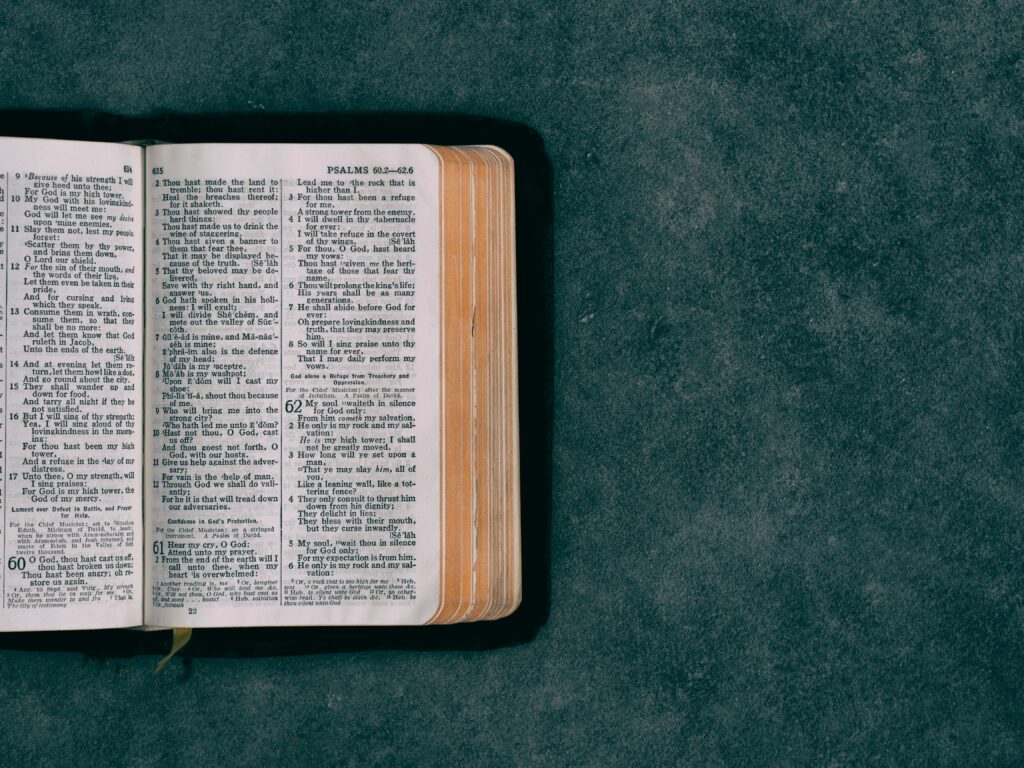
    Photo by Aaron Burden on Unsplash

    Have you ever tried to make or break a habit just by reading or listening to information? Have you been able to change a habit just by knowing something was the right thing to do? In my experience, it doesn’t usually work very well. We often struggle to do what we want to do, and instead we do what we know we shouldn’t do. Paul talked about this in his own life in Rom. 7:15 when he said, “I do not understand what I do. For what I want to do I do not do, but what I hate I do.” What we know from this is that knowledge doesn’t necessarily translate into action; our heads don’t always direct our hearts. And yet we live our lives—and read the Bible—as if this were the case, as if all we need is a little more information to live the Christian life more fully and joyfully. We’re really good at learning information, but changing our behavior is hard. Our connection to God’s Word needs more than just intellectual understanding; it also requires the engagement of our hearts.

    My thesis is that we need to enjoy Scripture. Understanding what we read can be enjoyable. And sometimes, to truly understand something, we first need to enjoy it. In what follows, I will draw heavily on an excellent book I recently read for inspiration: Enjoying the Bible: Literary Approaches to Loving the Scriptures by Matthew Mullins.

    Scripture is more than an instruction manual

    We usually know the right thing to do, but head knowledge doesn’t always direct our hearts. And even though we know that, we often read the Bible as if it were an instruction manual for our minds, seeking only the main idea to apply. To be fair, there are many things we can learn from the Bible that way. However, the problem arises when this becomes our only way of reading everything in the Bible. When we assume that understanding every text means grasping its ideas and applying them in simple ways, we risk missing how much of Scripture is also meant to move our hearts. We miss how important our hearts are in trying to change our actions.

    In looking beyond instructions, we don’t abandon the Bible’s truth or instruction. Paul tells Timothy in 2 Tim. 3:16 that “All Scripture is God-breathed and is useful for teaching, rebuking, correcting and training in righteousness.” We need to broaden our understanding of what instruction means. It’s not just about learning a lesson with our minds. Paul said to Timothy, “All Scripture.” That means everything, including the things that seem harder to understand.

    And some parts of the Bible aren’t direct and straightforward. In the Bible, God chose various artistic forms—poetry, proverbs, parables, stories—to communicate. These forms aim to capture our imaginations and move our hearts, leading to a deeper, more transformative understanding.

    Paul talks about our hearts and minds in Colossians 3:1-2:

    Since, then, you have been raised with Christ, set your hearts on things above, where Christ is, seated at the right hand of God. Set your minds on things above, not on earthly things. For you died, and your life is now hidden with Christ in God.

    In Greek, “set your hearts on” comes from a word that means “seek, look for, desire.” When Paul says “set your minds on,” that comes from a word that means “to think.” The Bible Knowledge Commentary notes that “The first suggests striving; the second suggests concentrating.” To view the Bible as only an instruction manual for our minds risks missing how it also aims to instruct our hearts and desires. But what does that look like?

    I find myself repeatedly drawn to Psalm 119. It is entirely dedicated to God’s Word, from beginning to end. It is filled with a rich tapestry of themes—themes that appear repeatedly throughout the psalm. And what was so striking was how many of these themes about God’s Word weren’t just about intellectual understanding. Many of them clearly addressed emotions and feelings. Still others pointed directly to actions in living out God’s truth. Themes include obedience, love for God’s word, remembering it, hoping in it, asking for understanding or for God to teach the psalmist, and not being shamed by the arrogant who are above God’s word, among others.

    One interesting theme is delight. The psalmist took delight in God’s Word—it came up 8 times, such as in verse 47: “for I delight in your commands / because I love them.”  In his commentary on the Psalms, John Goldingay defined the Hebrew word used for delight as “a child’s uninhibited, carefree playfulness.” Is this how we approach God’s Word? And if not, how can we get there?

    The heart is another term that appears repeatedly in Psalm 119. The Old Testament doesn’t seem to define “heart” the way modern Western thinking does, as a separate thing from our heads. In Hebrew, it’s all one idea. The Theological Dictionary of the Old Testament says the heart “functions in all dimensions of human existence and is used as a term for all the aspects of a person.” Unlike the modern Western understanding, which associates the heart with emotions and feelings, the Old Testament Hebrew concept is bigger. It represents the center of a person’s entire being. While I continue mentioning the head and heart as different things, remember that the authors of the Old Testament didn’t think that way.

    Take some time with Psalm 119. Go through it and see how it makes you feel. What images does it paint in your mind? What does it say to you through all of that? Because, as the psalm that is all about God’s Word, it’s incredibly revealing to see just how much it talks about our emotions, our feelings, and the posture of our hearts. About how we delight in Scripture. It’s not just about what we know in our heads; it’s about how God’s Word moves and transforms us from the inside out. What if we read Psalm 119 seriously? What if we root ourselves in its world and live as it says we should, and try to feel how the psalmist feels?

    Form and content go together.

    My second point is that form and content go together. The form of the communication matters, and it’s a real part of the message. Often, the biblical authors chose special ways to write. For instance, why did they sometimes write a poem instead of a simple statement or command? Why did Jesus speak in parables? Why is prophecy full of images and often written as poetry? This is because of something we frequently forget: form helps create meaning. What is said, and how it is said, are inseparable.

    Let’s consider Paul’s outburst of praise at the end of Romans 11 (vv. 33-36). Think about everything Paul just finished teaching his readers in the first 11 chapters. There’s a lot of great information there, some deep thinking by a highly educated man. And then, at the end of all that, he says this:

    33 Oh, the depth of the riches of the wisdom and knowledge of God!

    How unsearchable his judgments,

    and his paths beyond tracing out!

    34 “Who has known the mind of the Lord?

    Or who has been his counselor?”

    35 “Who has ever given to God,

    that God should repay them?”

    36 For from him and through him and for him are all things.

    To him be the glory forever! Amen.

    Why a poem here? It communicates something beyond mere words—Paul is trying to get at something bigger—a sense of awe and wonder and mystery.

    Or, let’s look at the paradoxes in Proverbs 26:4-5:

    4 Do not answer a fool according to his folly,

    or you yourself will be just like him.

    5 Answer a fool according to his folly,

    or he will be wise in his own eyes.

    How can both be true? These proverbs aren’t meant for a single, easy answer. They’re designed to make us pause, wrestle, and reflect, engaging our imaginations—our hearts. Jesus used paradoxes, too, like in Matthew 10:39. He says, “Whoever finds their life will lose it, and whoever loses their life for my sake will find it.” These teachings encourage us to meditate on God’s ways, which are often higher and different from our own, and they take time. There’s no simple application in these passages. We like to try to separate form from content, the medium from the message. But these examples show that’s not always possible. The form of the message is part of how it communicates to us.

    Rather than looking for a quick answer in the Bible every time we open it and twisting verses out of context to fit our needs, remember to also turn to the beautiful artistic parts that withhold answers, that instead encourage us to reflect on the confusing, paradoxical, and unknowable parts of life. In the case of Proverbs, is it telling me that I should answer the fool, or not? Perhaps I should meditate on these verses from Proverbs and see where God leads me in this particular circumstance.

    Consider Psalm 23:

    1 The Lord is my shepherd, I lack nothing.

    2 He makes me lie down in green pastures,

    he leads me beside quiet waters,

    3 he refreshes my soul.

    He guides me along the right paths

    for his name’s sake.

    4 Even though I walk

    through the darkest valley,

    I will fear no evil,

    for you are with me;

    your rod and your staff,

    they comfort me.

    5 You prepare a table before me

    in the presence of my enemies.

    You anoint my head with oil;

    my cup overflows.

    6 Surely your goodness and love will follow me

    all the days of my life,

    and I will dwell in the house of the Lord forever.

    To fully understand Psalm 23 means more than intellectually realizing you should be comforted. It means that reading it should actually be comforting—it should make you feel comforted. There’s a big difference between knowing God is a source of comfort and being comforted by Him. The poem of Psalm 23 demonstrates that God is our comforter by literally comforting us through the act of engaging with it and enjoying it. Let’s examine three aspects of this poem that are integral to the meaning.

    First, the poem in Hebrew consists of 19 lines: 9+9 (18) with one line positioned right in the middle, serving as the focus. Nine lines, then the pivotal line, “for you are with me,” and then nine more lines. Another thing: the beginning is 26 Hebrew words, and the end is 26 Hebrew words. This symmetry isn’t accidental. This is part of how Hebrew poetry works.

    Second, at the beginning, we read “The Lord is my shepherd” (third person, talking about God). At the end, we read “I will dwell in the house of the LORD forever” (third person, talking about God). But in the absolute center, when the author describes walking through the “darkest valley,” he shifts to direct address, second person, talking to God: “You are with me.” This psalm is saying that we intellectually know God is with us, but it’s in our hardest times, in the deepest darkness—right there in the middle of the psalm—that we perceive God most closely and address Him directly. That’s another way the psalm moves our hearts.

    Third, let’s examine the imagery. At the beginning (v. 1-3), the Lord is leading me; he’s in front of me. And then later toward the end (v. 6), goodness and mercy are pursuing me; they’re behind me. But in the middle (v. 4-5), the Lord is with me, he’s alongside me. I start to see an image of God before me, next to me, behind me—everywhere! I can’t go anywhere to escape the presence of God. So I can confidently say and feel with the psalmist: Lord, “You are with me.” This is all in the poetry, the beauty of words used in artistic ways. All these layers upon layers of beauty and artistry. The same God who was going ahead of you is the one who’s beside you and will be behind you, pursuing you with goodness and mercy all the days of your life. This is our God, always with us, all around us. We are never apart from his presence.

    And when we feel, in our hearts, the kind of danger that is in the middle of this psalm, and we are walking through the darkest valley, that’s when we perceive God most closely, and speak right to him: “I will fear no evil, for you are with me.” This is different from just reading the psalm for information? I don’t just know in my head that God is with me, I feel it too, deep inside.

    Understanding the Bible with our emotions might feel uncomfortable, and you might be concerned about meaning—can a scripture mean anything we want it to, based on how we feel at the moment? Do we each have our own personal truth? The short answer is no, but I believe that artistic communication (such as the Psalms) can allow for a spectrum of meaning. After all, art is often intentionally hard to pin down.

    We already know, intuitively, that a given Scripture can mean different things at different times. How many times have you returned to a passage or verse and noticed something you hadn’t seen before? We often hear someone say, or maybe say ourselves, that a verse has “taken on new meaning.” Do we allow for the Spirit to speak to us?

    Reflect on Psalm 23 and our examination of its meaning. Does reading this way imply that the meaning of Psalm 23 has changed, or that the way you used to read it was wrong? Or does this mean that you have changed, and maybe today, you have come to understand dimensions of the text that you didn’t understand before?

    Consider how big events in life have caused us to see familiar things in new ways. For example, love. Was I wrong about what love was for all those years before I met my wife? Or, did love take on new meanings for me, in addition to the old meanings I had from my childhood, when we fell in love? My old understanding of love wasn’t wrong. I knew my parents loved me. However, my new experiences with my wife allowed me to gain a deeper understanding of the meaning of love that I hadn’t grasped before. Then we had children, so now I understand love, and a father’s love, and our heavenly Father’s love for us, in a way that has changed yet again. The meaning of love was always that big, and it was always there. It was always a range, or spectrum—over time, I’ve become a person who can understand different aspects of it.

    When the psalmist expresses his contentment in Psalm 23: “The Lord is my shepherd; I lack nothing”—he is not writing about an emotion that is utterly foreign to most of us. At some point, we have all felt content. And yet the psalmist writes about it to imagine contentment anew. We read the psalm in whatever circumstance we find ourselves and experience contentment once again, or maybe for the first time, or maybe in a new way.

    We hold God’s revelation in our hands, but then we too often treat the form of it as an unimportant barrier between us and the message, when that form is the very thing in which we should be delighting and a part of that message. When we separate form from message, we are left with something less than God’s Word, most importantly, but also with something difficult to enjoy.

    When we talk about form, we are also talking about the arts. God’s word is beautiful and lovely and artistic. And art matters. God made this world beautiful. Alstair Gordon, in Why Art Matters, says,

    Art matters because it points to the presence of God, the ultimate maker and Creator. Art matters because it reminds us of who we are, where we have come from and how the journey ends. Art matters because it abides with us through the storm; it lights a candle when night falls; it salves the soul and quickens the mind. Art matters because it asks important questions, puts grief into words and finds colour for joy and songs for lament. Art matters because it embodies ideas, causing nations to rise and dictators to fall. Art matters because beauty matters, and true beauty is the glory of God. Art matters because you matter and you are made in the image of God.

    Think about how much of the Bible is written in an artistic style. All of this matters!

    Read Scripture for love and joy.

    Our ultimate goal in reading Scripture should be to deepen our love for God and for our neighbor. If reading the Bible doesn’t lead to a deeper understanding and greater enjoyment of scripture, then perhaps we haven’t truly grasped what we’ve read. We can learn to recognize and read these artistic texts in the Bible in a different way, designed to spark our imaginations and encourage contemplation. God is not only inviting us to study his Word to know right from wrong; God also desires a relationship with us. The Bible offers texts designed to accomplish both. The artistic, poetic, and beautiful portions of the Bible aim to capture and hold our attention. They don’t want us to look for the quick fact, reason, or answer. They want us to question, wonder, struggle, and rejoice in our efforts to know God.

    First, let’s slow down. We often rush through the Bible, seeking bite-sized takeaways and practical applications. But the spirit of reading for enjoyment and love means savoring every word. And to grasp a poem like Psalm 23, we need to take our time, reading it over and over, meditating on it, internalizing it, putting ourselves into its world.

    Second, let’s read like children. Jesus tells us to come to him as little children. Stories enchant them, and they don’t immediately try to reduce stories to abstract ideas or figure out the main point or the moral lesson. They simply enjoy them. And we can read kids a story over and over again, and they still love it. We’ve lost the ability to be enchanted by what we read in the Bible, to read it purely for enjoyment—to savor it. To have fun and immerse ourselves in the story, just as children do with their imaginations.

    Third, remember that study and enjoyment go together. Think of it like this: Bible study is like weight training. It builds strength and deep understanding. But reading the Bible for enjoyment is like eating: it’s a pleasure. We eat to live, yes, but we also want to eat good food! We want to delight in the meal. And when we eat well, we’re in a better position to train at the gym and get stronger. And also, it works the other way around. When we train hard, it makes us hungry for more food. In the same way we need to exercise and eat, we need both study and enjoyment to grow spiritually and truly love God’s Word.

    Engaging with the artistic aspects of Scripture, such as Psalm 23, instructs us not only through quick ideas and applications but also by reorienting our perspective. It fosters a deep trust in God and draws us into a more loving relationship with His Word and with Him.

    Conclusion

    God uses the beauty of his word and artistic forms to express Himself and draw us into deeper communion. God’s Word is beautiful, and its beauty is meant to be enjoyed. This enjoyment isn’t a distraction from some core truths hidden behind a confusing form; God isn’t trying to keep it all a secret. Instead, it’s a pathway to a relationship with our Creator, to a deeper understanding, and to love. The artistic elements of scripture point to God’s presence and remind us who we are.

    Learn to read the Bible as a work of art. Let its beauty captivate you and draw you closer to God. In John 14:21, Jesus said,

    “Whoever has my commands and keeps them is the one who loves me. The one who loves me will be loved by my Father, and I too will love them and show myself to them.”

    The more we love God’s Word, the more we’ll keep it. Being rooted in Scripture in this way—in a deep love for God’s Word and an enjoyment of experiencing it—draws us back again and again, transforming not just what we know, but who we are.

  • Thoughts on Christian Research

    As long as I have known him, Brian Schrag has quipped that research is ministry is love. That statement captures something essential, true, and profoundly biblical. In the hecticness of our work, where projects and goals dictate our rhythms, it is easy to rush past the sacred moments that make research meaningful—that make research into ministry. As Christian researchers, we strive to capture more than just data, and we are motivated by more than knowledge of the world—we aim to understand deeply, uncover beauty, and see lives transformed.

    Creating Local Arts Together explores a relational dynamic based on the life of Jesus and found in Philippians 2: be with–learn from–work toward (Schrag 2013, xxii). Just as Jesus did, we spend time with people and learn from them. Together, we work toward a better future, a flourishing community, and transformed lives. More recently, I listened to an episode of The Discerning Leader Podcast featuring photographer and videographer Amy Murgatroyd (Macchia and Murgatroyd 2021). I was captivated by how intensely she thinks about her work, capturing glimpses of the lives of families in images. As I listened, I reflected on how connected her approach is to how I think about research.

    In this paradigm, research begins with slowing down. In a frantic world, pausing to observe, listen, and learn is an act of resistance. We stop, step back from assumptions, and try to see and know what is before us. Christian researchers do not simply collect data; they enter into relationships with people, noticing the small, beautiful, ordinary, and profound. They are co-creating with the community, knowing and being known. This relationality reveals something more significant about the human condition, the Kingdom of Heaven, and the need for Good News.

    Christian researchers should be humble. Much like Amy Murgatroyd frames an image to center on the subject and their story rather than herself and her story, the researcher diminishes themselves to foreground those they learn from. The best research does not impose meaning; it invites the observer to ask: What is being revealed here? What story is unfolding? And as Christians: What is God doing? Understanding others’ lives and experiences requires intellectual curiosity and profound love. We seek not to impose our own narrative but to uncover truth, goodness, and beauty. Empathy points us toward that deep human longing for knowing and being known.

    Researchers, like photographers, try to capture and share what they see. Good research does not manufacture but reveals: It honors the participants by allowing them to speak. Our work is about helping communities flourish. People long to be noticed, understood, and known. Research from a Christian perspective is not merely about collecting data or proving something; it is about relationships. As researchers, our work is an act of love—paying attention, listening well, and creating space for the beauty of God’s creation to be revealed as lives are transformed.

    References

    Macchia, Steve, and Amy Murgatroyd. 2021. “Capturing Emotive Images | Discerning God Emotionally and Relationally Episode 04 – Leadership Transformations.” The Discerning Leader Podcast. Accessed November 22, 2024. [https://www.leadershiptransformations.org/podcast/2021/10/14/capturing-emotive-images-discerning-god-emotionally-and-relationally-episode-04/.]

    Schrag, Brian. 2013. Creating Local Arts Together: A Manual to Help Communities to Reach Their Kingdom Goals. Edited by James Krabill. Pasadena, CA: William Carey Library.

  • When Words Fall Short

    A few weeks ago at South Main Baptist Church, I heard an Advent sermon on songs in Luke—I had never pieced it together before I heard it said this way. Four times in the events surrounding the birth of Jesus, singing breaks out. God reveals himself, and the response to that revelation is a song. I’m struck by how, when overwhelmed by the glory and greatness of God, the response is artistic. Here, creative expression is the only proper response to God’s revelation.

    The first we encounter is Mary’s song:

    And Mary said:

    “My soul glorifies the Lord

    and my spirit rejoices in God my Savior,

    for he has been mindful

    of the humble state of his servant.

    From now on all generations will call me blessed,

    for the Mighty One has done great things for me—

    holy is his name.

    His mercy extends to those who fear him,

    from generation to generation.

    He has performed mighty deeds with his arm;

    he has scattered those who are proud in their inmost thoughts.

    He has brought down rulers from their thrones

    but has lifted up the humble.

    He has filled the hungry with good things

    but has sent the rich away empty.

    He has helped his servant Israel,

    remembering to be merciful

    to Abraham and his descendants forever,

    just as he promised our ancestors.

    The New International Version Lk 1:46–55.

    The narrative of Luke has been moving along quickly. In just a few verses, Mary hears from the angel Gabriel that she will have a baby (the Messiah), and she sets off to visit Elizabeth. But then, Luke’s narrative pauses for us to hear and ponder with Mary what all this means—to hear her response in song, praising God and telling us why. There is beauty in this artistic form, packed as it is with parallels and juxtaposed related lines, stretching and expanding the meaning of the words. Her song is her response to the miraculous, a proclamation of the good news: that the new life growing within her is God’s plan for salvation in motion. Mary celebrates the action of God toward humans—God is fulfilling his covenant.

    Next, Zechariah’s voice is restored as he names his son John. The first sound from his lips is a song:

    His father Zechariah was filled with the Holy Spirit and prophesied:

    “Praise be to the Lord, the God of Israel,

    because he has come to his people and redeemed them.

    He has raised up a horn of salvation for us

    in the house of his servant David

    (as he said through his holy prophets of long ago),

    salvation from our enemies

    and from the hand of all who hate us—

    to show mercy to our ancestors

    and to remember his holy covenant,

    the oath he swore to our father Abraham:

    to rescue us from the hand of our enemies,

    and to enable us to serve him without fear

    in holiness and righteousness before him all our days.

    And you, my child, will be called a prophet of the Most High;

    for you will go on before the Lord to prepare the way for him,

    to give his people the knowledge of salvation

    through the forgiveness of their sins,

    because of the tender mercy of our God,

    by which the rising sun will come to us from heaven

    to shine on those living in darkness

    and in the shadow of death,

    to guide our feet into the path of peace.”

    The New International Version Lk 1:67–79.

    Yet again, Luke’s narrative momentum stops for a song. He asks his readers to pause and reflect on all that is happening and what it might mean. Through the Holy Spirit, Zechariah communicates the significance of all that has happened thus far from God’s point of view. He responds to what God has done and is about to do: God has come (v. 68), and God will come again (v. 78). Zechariah reminds us that we are rescued so that we can respond in service (v. 74).

    The third song is shorter and divine in origin: the angels burst forth in praise after the good news is told to the shepherds:

    Glory to God in the highest heaven,

    and on earth peace to those on whom his favor rests.

    The New International Version Lk 2:14.

    This song is cosmic worship, and though the story of salvation isn’t finished yet, enough is clear about what God is doing that responses of joy and praise erupt from the angelic host. The angels join the chorus of voices already lifted in God’s honor, offering a heavenly perspective on the birth of the Messiah. They push the universal significance of these events into more explicit focus: hints of salvation for both Jew and Gentile have already appeared, and now the divine messengers declare that good news is meant “for all the people” (v. 10) and that peace has arrived “on earth” (v. 14).

    Finally we hear from Simeon. Like Zechariah, he is a righteous man associated by Luke with the temple, and he too responds in song through the Holy Spirit:

    Sovereign Lord, as you have promised,

     you may now dismiss your servant in peace.
    

    For my eyes have seen your salvation,

    which you have prepared in the sight of all nations:

    a light for revelation to the Gentiles,

    and the glory of your people Israel.

    The New International Version Lk 2:29–32.

    Also like Mary, he praises God and then expounds on why. Simeon sees salvation at hand and God’s promises coming to fulfillment.

    I marvel that all four of these responses are sung. Words alone would not suffice, and artistic expression completed the message. Luke and these four songs remind us that artistic expression is a natural and powerful response to God’s revelation. These songs are not mere embellishments to Luke’s narrative; he pauses the story to allow us to reflect, worship, and proclaim the good news. When words alone fall short, the creative arts enable us to stop and respond to God with the beauty that His revelation demands.


    A note: Some people wonder whether these four passages were songs or just spoken. I believe they are songs because many respected, recent commentaries call them that, and those theologians are more knowledgeable than me about these things. Also, there are some interesting ideas that these were collective songs, and the reason they are preserved in such clear poetic form for Luke to document is because many people knew the songs and could quote them easily to him. If they just “said” the words, I don’t think their speech would have included all the artistic features they do and that Luke would have set them apart the way he did. And we memorize songs a lot easier than speeches or even poetry. At the very least, even if we can’t say they were sung, we can safely say they are artistic expressions—communication set apart from everyday speech. These are special kinds of communication. We can’t know for sure, but singing is the more reasonable answer based on what we know about that culture and how they communicated.